Pablo Picasso
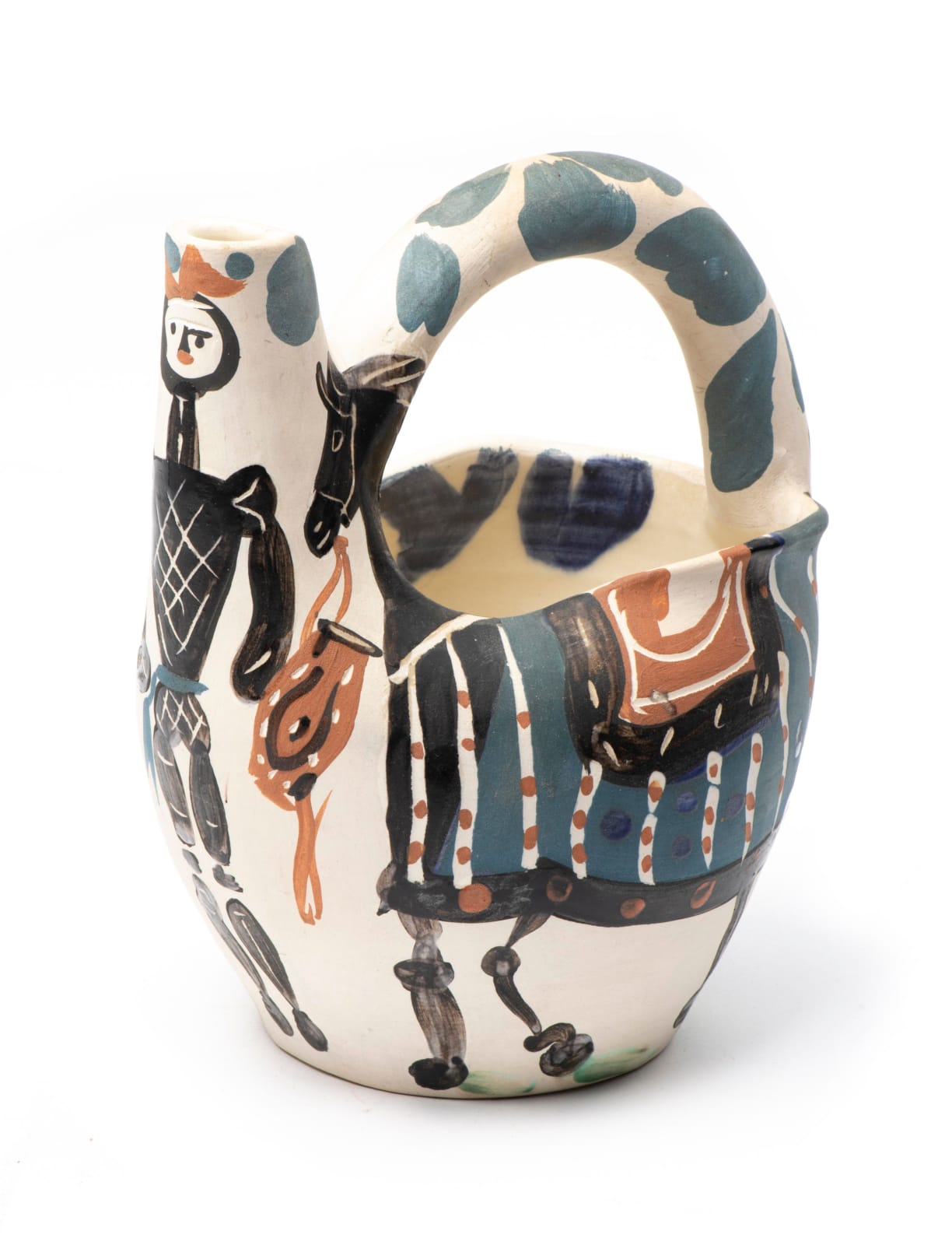
Cavalier et cheval, 1952
white earthenware, slip decoration, engraved with a knife on white enamel
23 x 18.5 cm
9 x 7 1/4 in
9 x 7 1/4 in
Copyright The Artist
Ever since his first stay in Vallauris, also known as 'the town of a hundred potters', Pablo Picasso has been dazzled by the freedom and expressive nature of ceramics. To...
Ever since his first stay in Vallauris, also known as "the town of a hundred potters", Pablo Picasso has been dazzled by the freedom and expressive nature of ceramics. To satisfy his creative curiosity, the artist embarked on a collaboration with the Ramié couple, who founded the Madoura studio in 1947. It was around the exploration of a new material that the painter transcribed his iconic subjects, building a marvellous universe filled with forms and textures. What Picasso expresses in his ceramic works is a fundamentally living testimony a fundamentally living testimony, an ongoing conversation, requiring a contribution of those who, with him, attempt to penetrate the creative essence alongside the analysis of form.
Provenance
Collection of Robert Sadoul (gift of the artist)Private collection
Literature
Picasso: Catalogue Raisonné de l'oeuvre céramique de Picasso, 1947-1971, by Alain Ramié, Editions Madoura, Vallauris, 1988, illustrated under no.137, p.77.Join our mailing list
* denotes required fields
In order to respond to your enquiry, we will process the personal data you have supplied to communicate with you in accordance with our Privacy Policy. You can unsubscribe or change your preferences at any time by clicking the link in our emails. This site is protected by reCAPTCHA and the Google: Privacy Policy and Terms of Service apply.