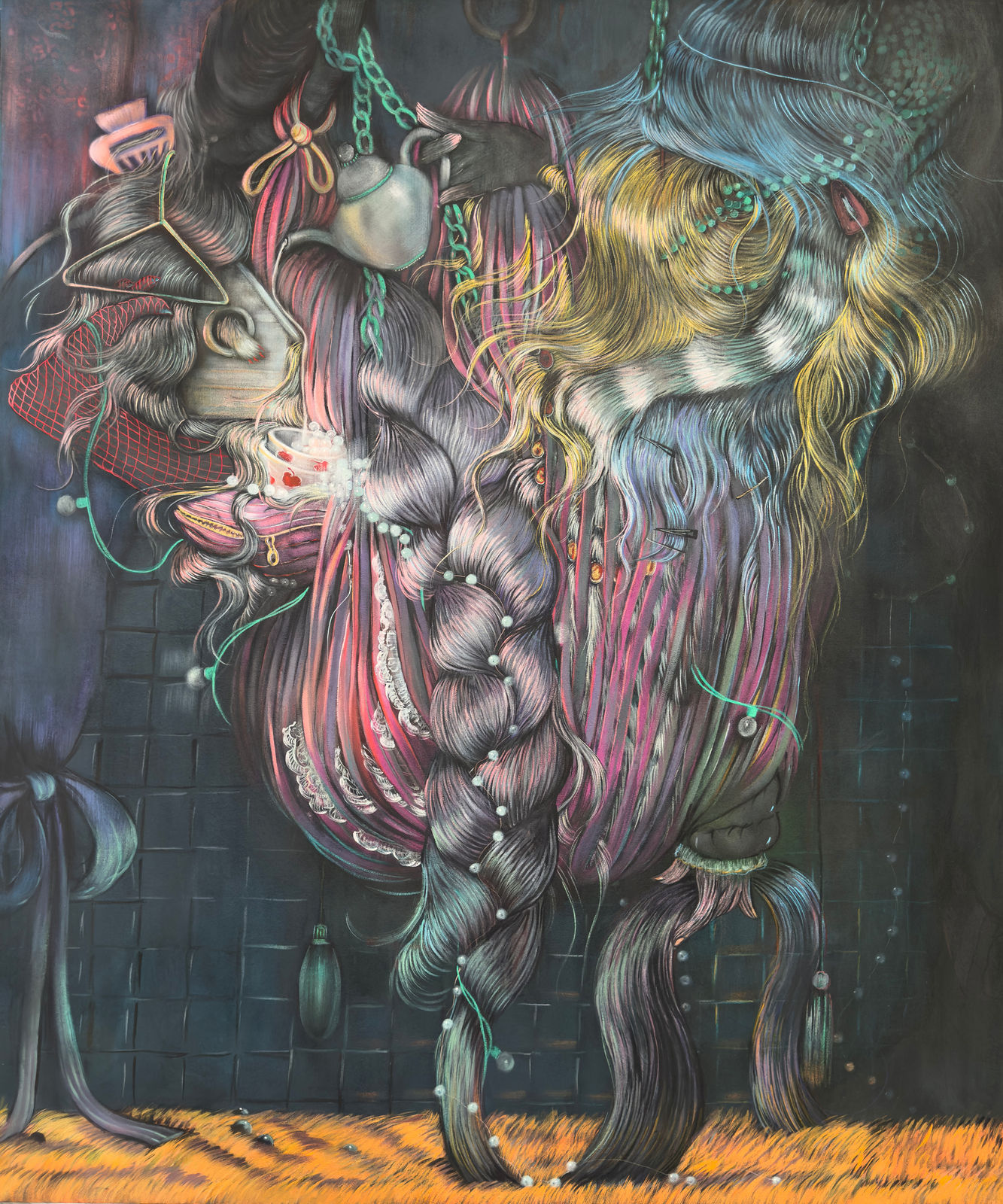
Bea Scaccia Italy, b. 1978
72 x 60 x 1 5/8 in
The starting point for this series ranges from the irony and tension in Goya’s depictions of elderly figures on swings to the theatricality of Fragonard’s Les Hasards Heureux de l’escarpolette. From there, Scaccia began to reflect on the word “swing” and its layered associations: shifting moods, emotional volatility, and the way femininity is often framed as unpredictable. She extended this play on language toward dancing, rhythm, and even the contemporary idea of “swingers,” exploring identity and the shifting roles or masks people wear.
During her research on swings, she encountered compression swings, used therapeutically to help with anxiety. These vertical swings involve a more contained movement, often with a participant hanging, with one foot in the air which resonated with her thinking about Fragonard’s swing painting. The combination of controlled movement and suspended motion offered a rich point of departure for her exploration of form, gesture, and narrative.