In the Crossfire: Brutal Harmony and the Fragility of Hope: Arne Quinze
In the presence of the artist
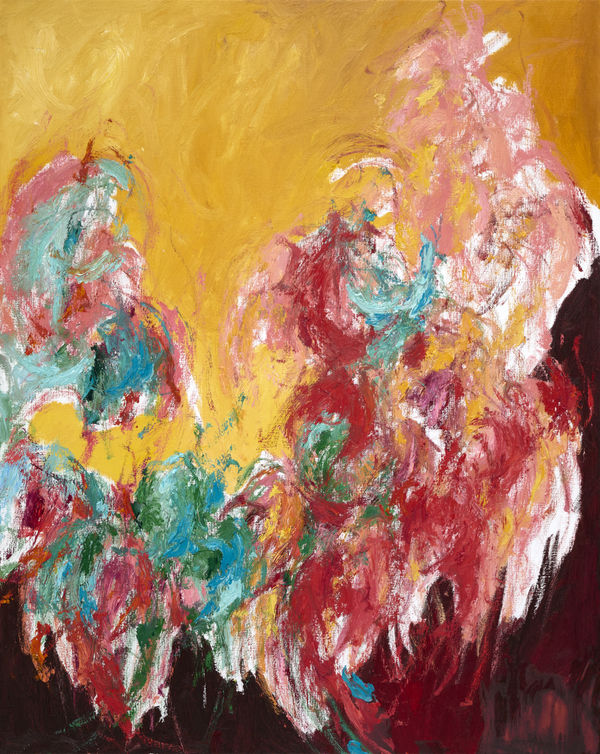
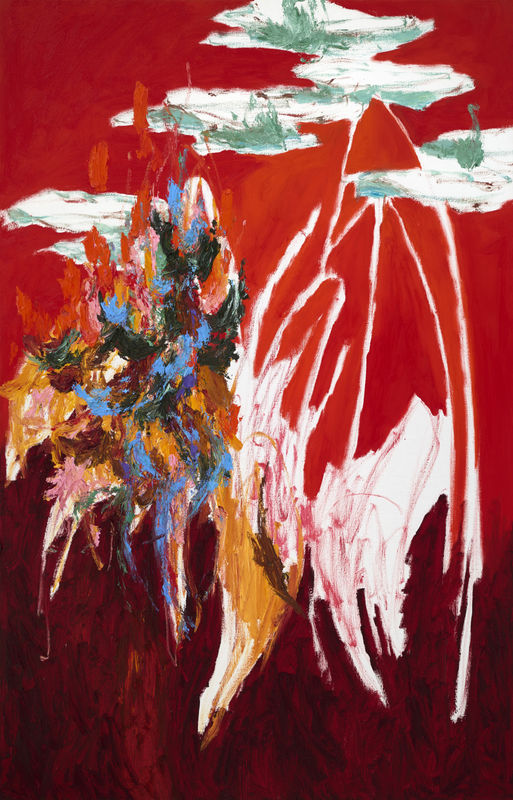
For more than thirty years, Arne Quinze has closely observed the natural world, drawing inspiration from its beauty and resilience. Spanning new sculptures, paintings, and works on paper, In the Crossfire: Brutal Harmony and the Fragility of Hope probes the relations between natural and urban landscapes, and considers the possibility of achieving biodiversity in environments that are largely dominated by human-made structures. Here, he transforms his lifelong investigation of the fractured relationship between humanity and the world into a vibrant, refreshing insight into our cultural and social landscape.
Quinze celebrates pure beauty, vitality, and possibility. Diversity, in all its facets, fuels his vision: flowers will always break through concrete, hope will always endure, and multiplicity will always assert itself against uniformity.
At the core of Quinze’s work is an uncompromising belief in diversity. He challenges the monotony of streamlined behavior and standardized aesthetics of the urban grid. This enforced uniformity transforms cities into grey, inhuman spaces dominated by concrete and rigid systems. Public life becomes sterile; our connection to plants, insects, animals — to life itself — is gradually severed. Even human expression falls into conformity: similar clothes, similar postures, similar lives.
Quinze’s response is not critique alone but an active artistic counter-movement. Rather than moralizing, he turns toward the principles revealed in nature — a living system of multiplicity, contradiction, fragility, and force in constant harmony. Through vibrant sculptural and painted works, Quinze channels this multiplicity into forms that radiate beauty, tension, and life.
The exhibition brings together new and previously unseen works — oil paintings, standing structures — each forged through a process that is at once raw and delicate. Quinze kneads, fractures, bends, and reconstructs matter, revealing the thresholds of its existence. Construction and deconstruction are inseparable in his atelier; they are gestures that mirror growth and decay in the natural world.
Materials themselves become protagonists in this choreography of diversity. Murano glass, developed through his ongoing collaboration with Berengo Studio, seems both material and translucent, unyielding and fragile. Raw clay and ceramics carry the memory of the earth. Roughly sculpted aluminium and bronze bear the marks of pressure, impact, and manipulation. Each material occupies a precise place in Quinze’s expanding vocabulary reflecting his conviction that true strength lies in multiplicity rather than uniformity.
This process begins in Quinze’s wildflower garden, an open-air laboratory where growth unfolds without hierarchy and decay is never failure. It continues across decades of travel to the world’s most diverse landscapes, where asymmetry, difference, and adaptation inform every work. These observations guide everything from intimate paper models to monumental public installations.
Quinze positions himself as a mediator between the living natural world and a society he describes as trapped in a “four-walls religion” — confined by structures, detached from complexity and organic life. His works act as ruptures, tearing open space to reintroduce chaos, tenderness, and generosity into our urban and mental landscapes.
In the Crossfire: Brutal Harmony and the Fragility of Hope is an exhibition of thresholds — material, social, and perceptual. Each work carries the visible traces of its becoming: compressed clay, molten glass, bent metal, and painted surfaces charged with tension. Together, the works form a landscape where brutality and fragility are complementary forces, and where diversity emerges as the essential condition for life, growth, and imagination.


-
 Arne QuinzeAnnihilation (04), 2026hand-sculpted glass102 x 42 x 38 cm
40 1/8 x 16 1/2 x 15 in
base: 110 x 45 x 45 cm -
Arne QuinzeAnnihilation Physics (02), 2025hand-sculpted glass63 x 39 x 29 cm
24 3/4 x 15 3/8 x 11 3/8 in
base: 110 x 40 x 40 cm -
Arne QuinzeAnnihilation (05), 2026hand-sculpted glass72 x 46 x 34 cm
28 3/8 x 18 1/8 x 13 3/8 in
base: 110 x 45 x 45 cm -
Arne QuinzeAnnihilation Physics (03), 2025hand-sculpted glass69 x 38 x 34 cm
27 1/8 x 15 x 13 3/8 in
base: 110 x 40 x 40 cm -
Arne QuinzeAnnihilation Physics (01), 2025hand-sculpted glass37 x 48 x 39 cm
14 5/8 x 18 7/8 x 15 3/8 in
base: 110 x 40 x 40 cm -
Arne QuinzeLiquaceram (01), 2025hand-blown glass and ceramic110 x 40 x 50 cm
43 1/4 x 15 3/4 x 19 3/4 in
wooden base not included -
Arne QuinzeLiquaceram (02), 2025hand-blown glass and ceramic110 x 70 x 50 cm
43 1/4 x 27 1/2 x 19 3/4 in
wooden base not included -
Arne QuinzeLiquaceram (03), 2025hand-blown glass and ceramic107 x 60 x 58 cm
42 1/8 x 23 5/8 x 22 7/8 in
wooden base not included -
Arne QuinzeYielding Glauca, 2025oil on canvas160 x 130 cm
63 x 51 1/8 in -
Arne QuinzeChlorospire Oracle, 2025oil on canvas140 x 90 cm
55 1/8 x 35 3/8 in -
Arne QuinzePhotosynthetic Daydream, 2025oil on canvas140 x 90 cm
55 1/8 x 35 3/8 in -
Arne QuinzeSunseed Murmuration, 2025oil on canvas100 x 80 cm
39 3/8 x 31 1/2 in -
Arne QuinzeLupine (large), 2026painted aluminium350 x 145 x 130 cm
137 3/4 x 57 1/8 x 51 1/8 in
base : 100 x 100 cm -
Arne QuinzeLupine (medium), 2026painted aluminium212 x 65 x 65 cm
83 1/2 x 25 5/8 x 25 5/8 in -
Arne QuinzeLupine (small), 2026painted aluminium82 x 55 x 55 cm
32 1/4 x 21 5/8 x 21 5/8 in -
Arne QuinzeOil Paint Sketch 251103, 2026oil paint on translucent paper155 x 123 cm
61 x 48 3/8 in
framed: 154.5 x 122.8 x 4 cm -
Arne QuinzeAntiphonal Tenuous (1), 2026hand-blown glass, wood and metal173 x 80 x 46 cm
68 1/8 x 31 1/2 x 18 1/8 in -
Arne QuinzeAntiphonal Tenuous (2), 2026hand-blown glass, wood and metal196 x 48 x 48 cm
77 1/8 x 18 7/8 x 18 7/8 in -
Arne QuinzeAntiphonal Tenuous (3), 2026hand-blown glass, wood and metal203 x 65 x 45 cm
79 7/8 x 25 5/8 x 17 3/4 in -
Arne QuinzeOil Paint Sketch 251105, 2026oil paint on translucent paper121 x 103 cm
47 5/8 x 40 1/2 in
framed: 155 x 102.5 x 4 cm -
Arne QuinzeOil Sketches 01, 2025oil paint on translucent paper120 x 200 cm
47 1/4 x 78 3/4 in
framed: 135.5 x 217.5 x 4 cm -
Arne QuinzeOil Sketches 02, 2025oil paint on translucent paper120 x 195 cm
47 1/4 x 76 3/4 in
framed: 134.5 x 203.5 x 4 cm